
Method comparison · CO₂ decaffeination
Decaf has an image problem. Some say it tastes of nothing. Others worry about the “chemicals” supposedly used to wash the caffeine out. Both are sometimes true and sometimes not. It all depends on how the coffee was decaffeinated.
Four methods dominate worldwide. They differ in what dissolves the caffeine, how much flavour stays in the bean, what residues remain and what the whole thing costs. Here is an overview for roasters, food manufacturers and anyone considering their own decaffeination operation.
In the interest of full disclosure: Natex builds CO₂ plants, so our view isn’t entirely neutral. Still, every method has its place, and that’s how we want to present them.
First: how does the caffeine get out of the bean?
Decaffeination always happens with raw, green coffee, before roasting. The beans are first pre-treated with water or steam so they swell and the caffeine becomes mobile. A medium then dissolves the caffeine, after which the beans are dried and roasted as usual. The big difference lies in that one step: what dissolves the caffeine?
1. Methylene chloride: the low-cost classic
Methylene chloride (dichloromethane) is a chlorinated solvent. It is either applied directly to the beans or used indirectly: the coffee is soaked in hot water, and only that caffeine-loaded water is treated with the solvent. The process is fast, inexpensive and fairly selective, which is why it is still widely used.
The catch is the solvent itself. Methylene chloride evaporates at around 40 °C, but traces can remain in the bean. The EU allows a maximum of 2 mg per kilogram of roasted coffee, the US FDA 10 ppm. Measured values are usually well below these limits. However, the International Agency for Research on Cancer (IARC) classifies the substance as “probably carcinogenic”.
In the US, a petition has been pending since late 2023 to revoke methylene chloride’s approval for food use. The FDA reopened public comments until the end of June 2026, explicitly asking about a possible phase-out (Daily Coffee News). At that point, no decision had been made. For producers this means: the method is legal, but the reputational risk is growing.
2. Ethyl acetate: “naturally decaffeinated”
Ethyl acetate occurs in small amounts in fruit. For coffee it is often produced from fermented sugarcane, hence the name “sugarcane process”. The packaging then tends to say “naturally decaffeinated”.
That sounds better than the chemistry: natural and synthetic ethyl acetate are exactly the same substance, and it remains a solvent. It is considered safe for health, and the EU sets no fixed residue limit. The drawback is more about flavour: ethyl acetate is less selective than methylene chloride. Treatment takes longer and more of the other compounds are lost. Some coffees pick up a slightly fruity or sour note.
3. Water process: solvent-free, but costly
The water process, known for example as the Swiss Water® Process, uses no solvent at all. The beans are soaked in water that is already saturated with all the soluble coffee compounds except caffeine. As a result, almost only the caffeine migrates from the bean into the water. Activated carbon filters remove it, and the water is reused.
The result is solvent-free and popular with consumers. On the other hand, the process is complex and expensive, and providers publish very little process data. With some coffees the flavour becomes a little flatter. The caffeine is remaining in the activated charcoal and is mostly not recovered due to the effort that would be required.
4. Supercritical CO₂: selective and residue-free
CO₂ decaffeination was developed around 1970 by Kurt Zosel at the Max Planck Institute for Coal Research and was one of the first major industrial applications of supercritical CO₂. Above 31 °C and about 74 bar, carbon dioxide behaves neither quite like a gas nor quite like a liquid. In this state it penetrates the bean and selectively dissolves the caffeine, while flavour and aroma compounds stay in the bean.
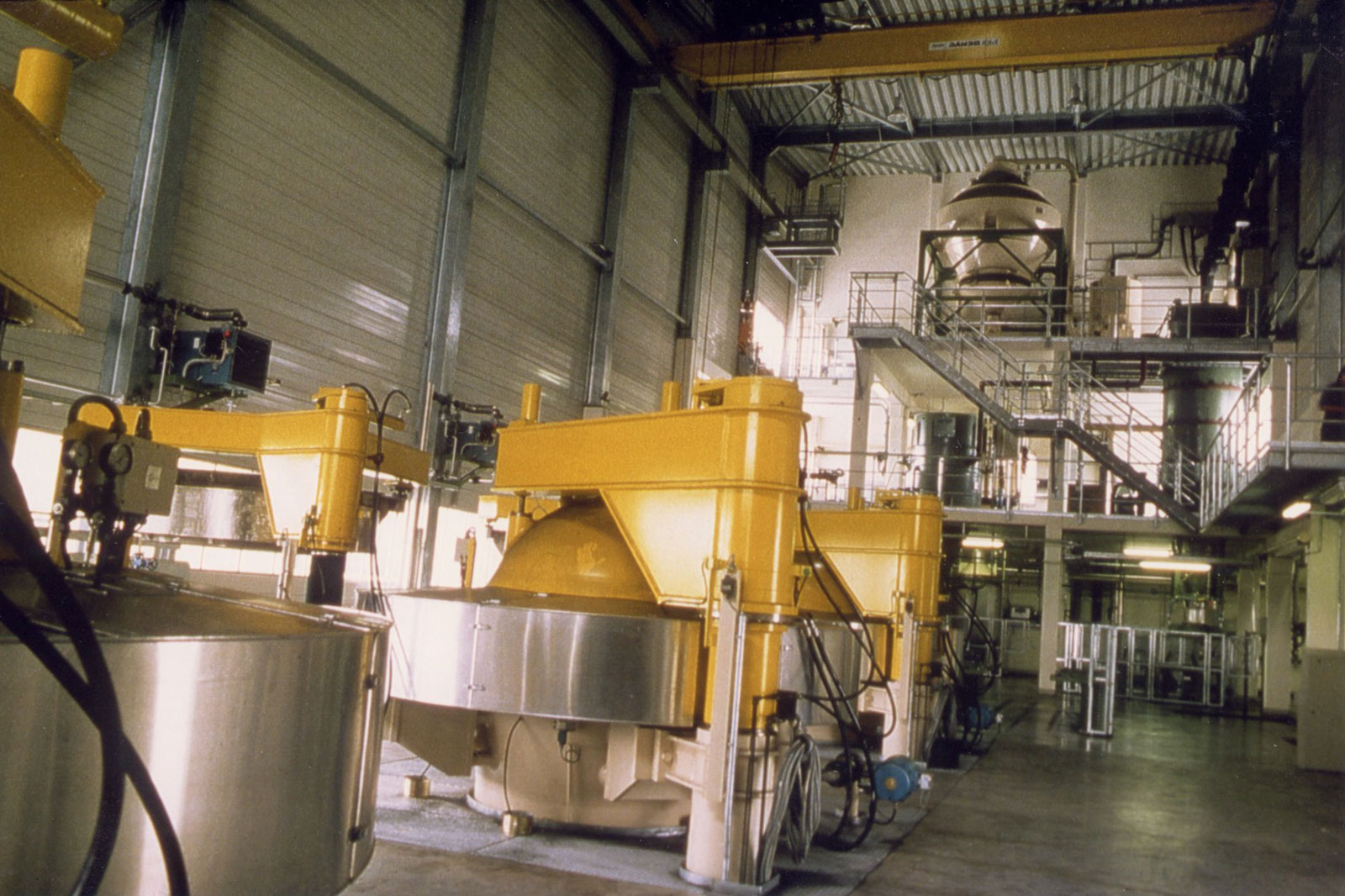
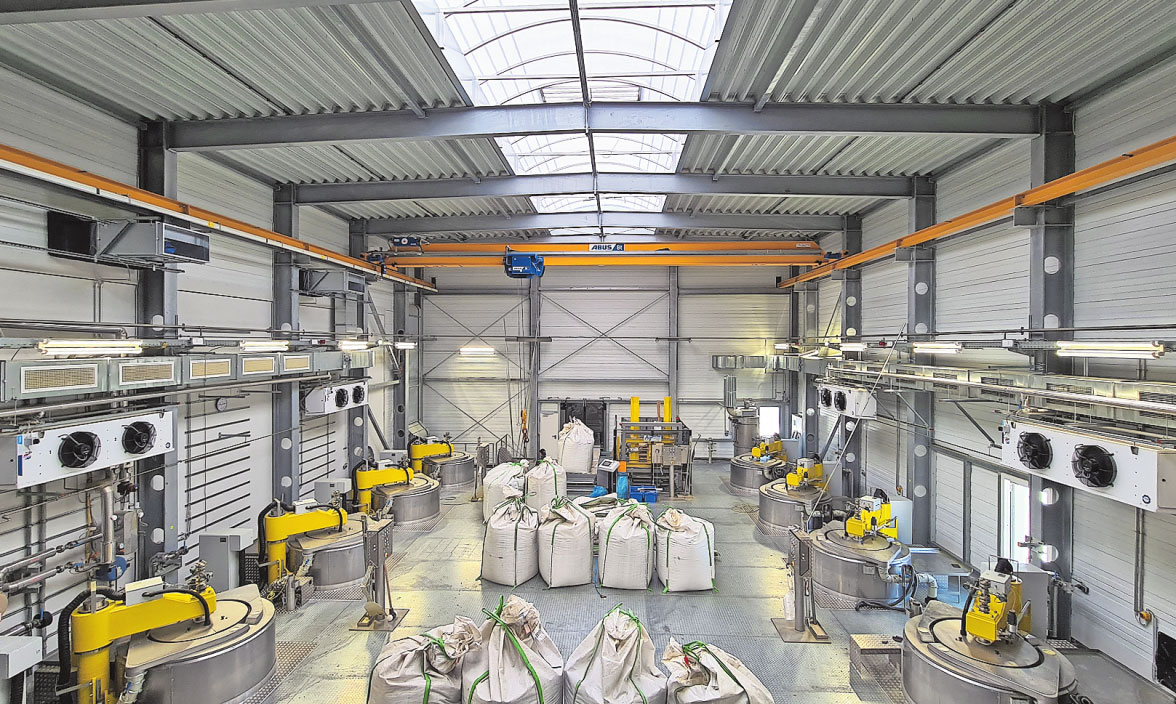
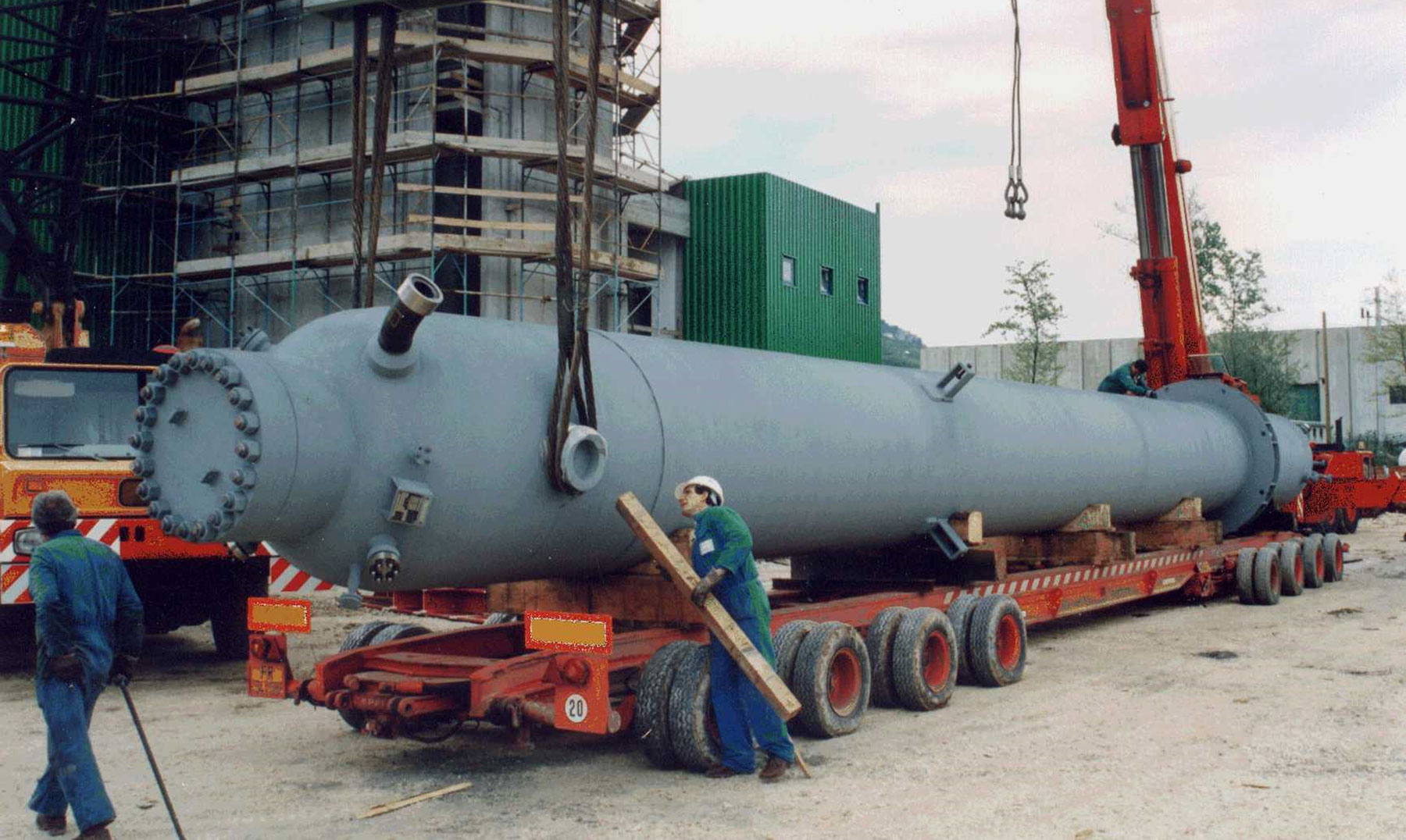
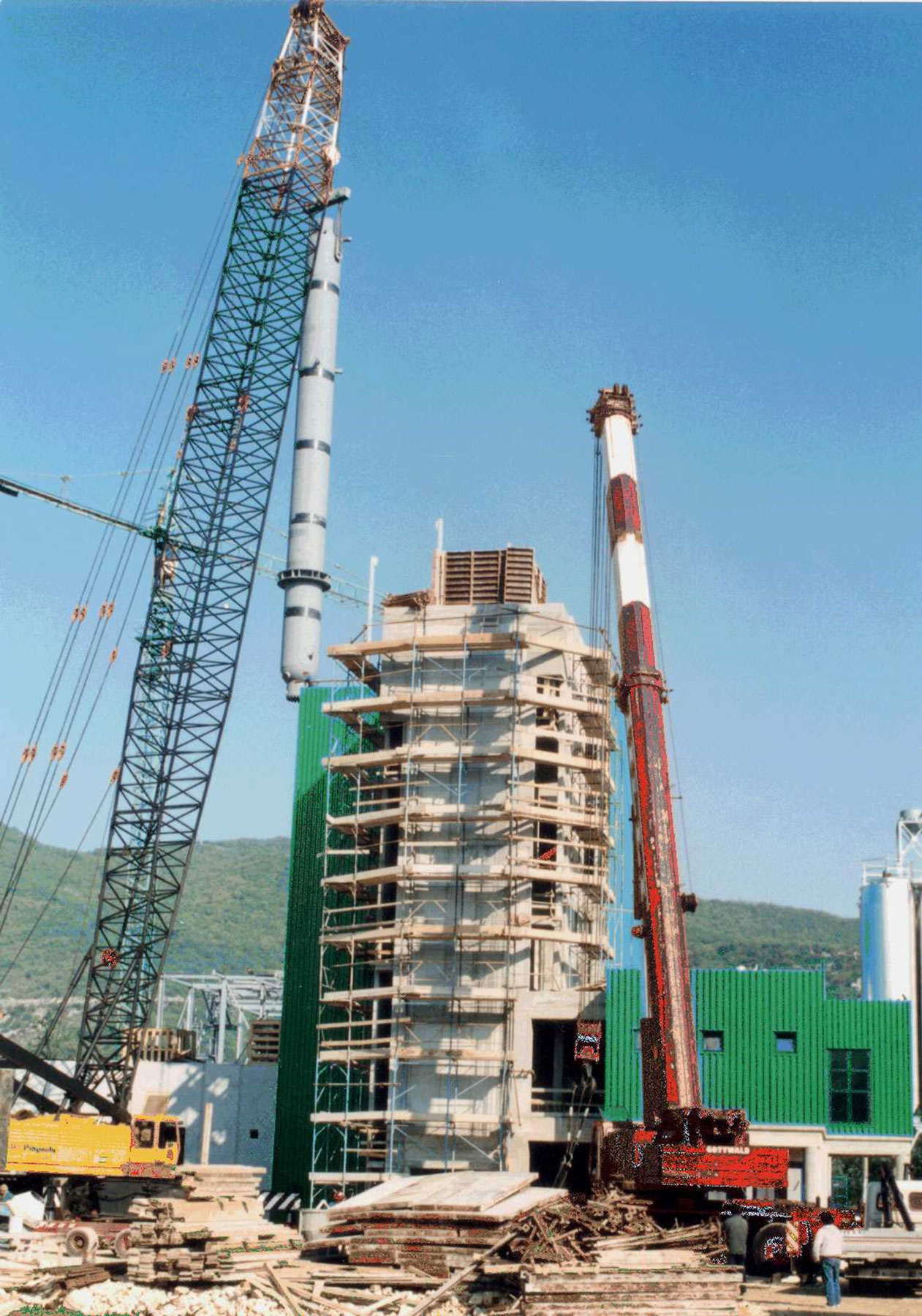
What this looks like at industrial scale is shown by the plant Natex built for Lavazza in Italy, in operation since 1991:
- The moistened green beans sit in three extractors of 20 m³ each. The CO₂ flows through the bean bed and picks up the caffeine.
- In a washing column, the caffeine is continuously removed from the CO₂, which then returns to the extractor. It stays supercritical throughout and doesn’t have to be constantly evaporated and condensed. That saves a lot of energy.
- A batch takes 8 to 14 hours, depending on type and origin. 92 to 97 % of the caffeine is removed.
Because CO₂ is a naturally occurring substance that escapes completely after the process, no solvent residues remain in the bean. Organic coffee keeps its organic certification after CO₂ decaffeination. And the extracted caffeine isn’t waste: it is recovered at above 90 % purity and sold, for example, to energy drink or pharmaceutical manufacturers.
The downside: high-pressure plants require a bigger investment than a solvent process. CO₂ decaffeination pays off mainly at larger volumes, ideally from around 5,000 tons per year. At that scale the cost per ton drops to very attractive levels.
Real consumption figures, not marketing claims
The four methods side by side
| Methylene chloride | Ethyl acetate | Water | Supercritical CO₂ | |
|---|---|---|---|---|
| What removes the caffeine? | Chlorinated solvent | Solvent, often from sugarcane | Water + activated carbon filters | Carbon dioxide at high pressure |
| Residues | Low, EU limit 2 mg/kg | Low, no fixed EU limit | No solvents | None, CO₂ escapes completely |
| Flavour | Good, fairly selective | Less selective, may alter flavour | Good, sometimes flatter | Very good, highly selective |
| Effort and cost | Low | Low to medium | High | High investment, low cost per ton at scale |
| Consumer image | Under pressure | "Naturally decaffeinated" | "Chemical-free" | "Chemical-free", organic status retained |
| Caffeine by-product | Yes | Yes | Depends on provider | Yes, above 90 % purity |
Which method suits whom?
If you compete mainly on price, methylene chloride is the cheapest option, but it comes with a growing image problem. Ethyl acetate offers a better label (at least at this moment) at moderate cost, but it’s a compromise on flavour. The water process suits speciality coffee, where “solvent-free” is the key selling point and customers pay the higher price.
Supercritical CO₂ plays to its strengths at large volumes: little loss of flavour, no residues, suitable for organic, plus a by-product you can sell. The Lavazza plant shows that the investment pays off: it has been running for more than 30 years and today could handle up to 14,000 tons per year, well above the 10,000 tons it was originally designed for.